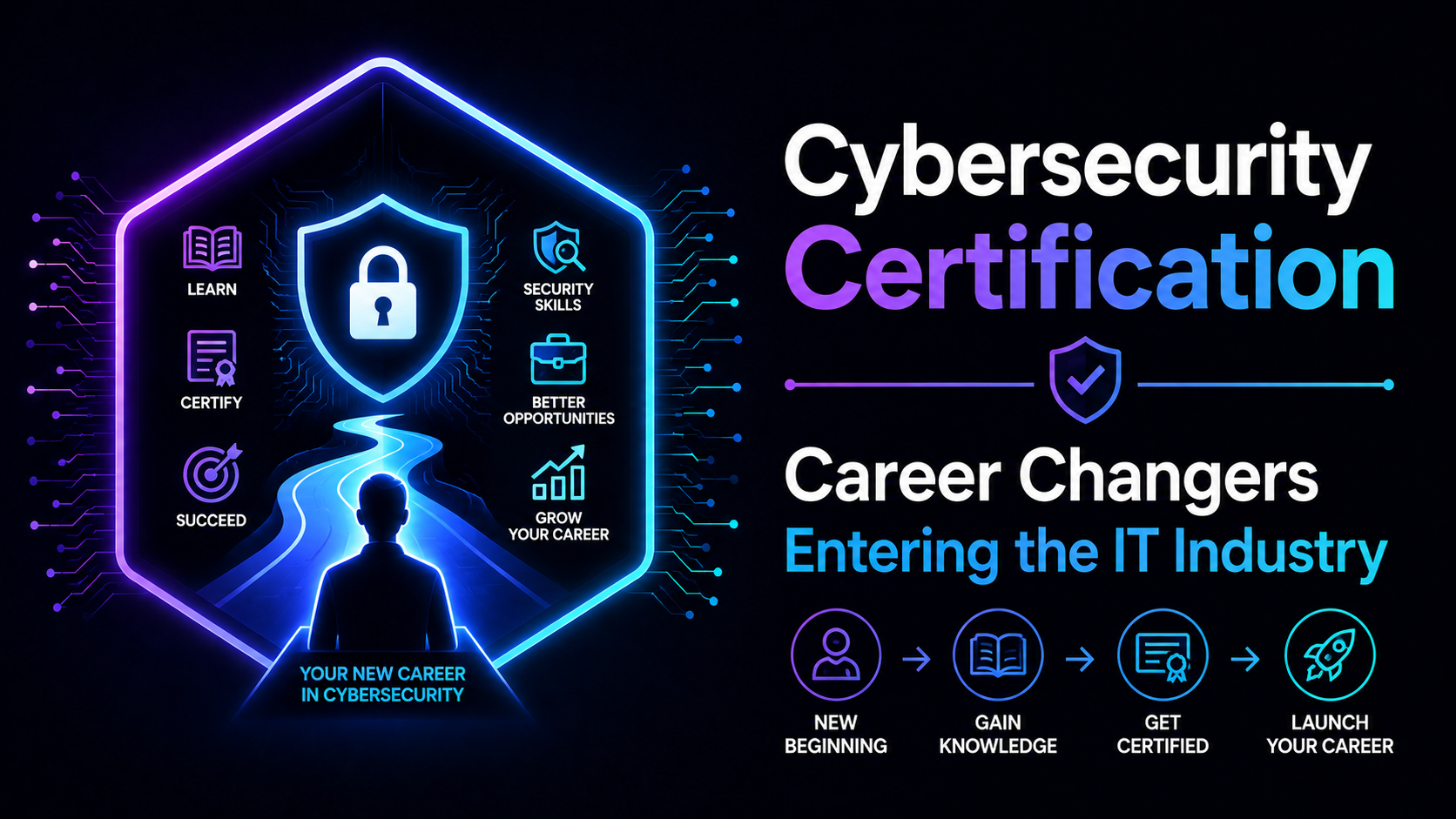
Changing careers can feel challenging, especially when moving into a technical field like cybersecurity. However, cybersecurity has become one of the most accessible and rewarding career paths for professionals coming from non-IT backgrounds. With organizations facing increasing cyber threats and a growing shortage of skilled security professionals, opportunities continue to expand for motivated learners.
The good news is that you do not need a computer science degree or years of technical experience to start a cybersecurity career. Many successful security professionals began in fields such as education, finance, healthcare, customer service, military service, and business operations.
This roadmap explains how career changers can build the skills, knowledge, and confidence needed to enter the cybersecurity industry in 2026 and beyond.
Why Cybersecurity Is Attractive for Career Changers
Unlike some technical careers that require extensive academic backgrounds, cybersecurity values practical skills, continuous learning, and problem-solving abilities.
Many transferable skills from other industries are highly valuable in cybersecurity, including:
- Critical thinking
- Communication
- Risk assessment
- Attention to detail
- Project management
- Decision-making
- Documentation skills
Organizations increasingly recognize that successful cybersecurity teams need diverse perspectives rather than purely technical expertise.
As a result, career changers often bring strengths that can help them succeed in security roles.
Understanding the Cybersecurity Landscape
Before pursuing certifications or technical training, it helps to understand the major areas within cybersecurity.
Cybersecurity is not a single job. It includes multiple specialties with different responsibilities.
| Cybersecurity Area | Primary Focus |
|---|---|
| Security Operations | Monitoring and incident response |
| Network Security | Protecting network infrastructure |
| Cloud Security | Securing cloud environments |
| Governance and Compliance | Policies and risk management |
| Security Engineering | Designing security solutions |
| Identity Management | Access control and authentication |
Exploring these areas early can help career changers identify which path aligns best with their interests and strengths.
This concept becomes easier with Cert Mage’s YouTube explanation:
Step 1: Build Basic IT Knowledge
One common mistake career changers make is jumping directly into advanced cybersecurity topics. Cybersecurity is built on IT fundamentals. Understanding how systems operate makes security concepts much easier to learn.
Learn Networking Basics
Networking forms the foundation of modern cybersecurity.
Important topics include:
- IP addressing
- DNS
- TCP/IP
- Routing
- Switching
- Firewalls
- VPNs
You do not need expert-level networking knowledge immediately, but understanding these concepts is essential.
Learn Operating Systems
Most security professionals work with both Windows and Linux systems.
Focus on:
- User accounts
- File systems
- Permissions
- Command-line basics
- System logs
- Security settings
Operating system knowledge plays a critical role in security investigations and system protection.
Step 2: Develop Cybersecurity Fundamentals
After learning basic IT concepts, begin studying core security principles.
Key areas include:
Security Concepts
Learn fundamental topics such as:
- Confidentiality
- Integrity
- Availability
- Risk management
- Security controls
- Security frameworks
Common Cyber Threats
Understanding how attacks occur helps build defensive knowledge.
Focus on:
- Phishing
- Malware
- Ransomware
- Social engineering
- Credential theft
- Insider threats
The goal is not to become an expert immediately but to understand how organizations defend against these risks.
Step 3: Gain Practical Experience
Hands-on practice is one of the most important steps in any cybersecurity roadmap.
Employers value practical skills because security work involves real-world problem-solving.
Some effective ways to gain experience include:
- Building a home lab
- Using virtual machines
- Practicing Linux administration
- Exploring network monitoring tools
- Learning basic security testing techniques
- Analyzing system logs
Practical learning helps reinforce theoretical concepts and improves confidence. Many aspiring professionals use educational resources and preparation materials from Cert Mage (www.certmage.com) to supplement their learning and strengthen their understanding of cybersecurity concepts.
Step 4: Earn Entry-Level Certifications
Certifications can help career changers demonstrate commitment and foundational knowledge.
Entry-level certifications often cover:
- Security fundamentals
- Networking concepts
- Threat management
- Security operations
- Risk assessment
Certifications are not a substitute for practical experience, but they can strengthen resumes and improve interview opportunities. The most effective strategy combines certification preparation with hands-on learning.
Step 5: Choose an Entry Point Into IT
Many cybersecurity professionals do not begin directly in dedicated security roles.
Career changers often enter through positions such as:
Help Desk Technician
Help desk roles provide exposure to systems, users, troubleshooting, and security-related issues.
IT Support Specialist
Support positions help develop technical skills while building experience with enterprise technologies.
Network Support Technician
Networking experience creates a strong foundation for future security roles.
Junior Security Analyst
Some organizations hire entry-level analysts who demonstrate security knowledge and learning potential. Starting in a broader IT role can accelerate long-term cybersecurity growth.
Step 6: Build a Professional Learning Routine
Cybersecurity changes constantly. New threats and technologies emerge every year.
Successful professionals commit to continuous learning.
A practical weekly routine might include:
- Reading security news
- Practicing in labs
- Reviewing certification material
- Watching technical tutorials
- Participating in security communities
Consistency matters more than studying for long hours occasionally.
Small improvements accumulated over time produce significant career progress.
Skills That Help Career Changers Succeed
Technical skills are important, but many non-technical skills can also provide a competitive advantage.
Communication Skills
Security professionals regularly explain risks to managers, executives, and end users.
Problem-Solving
Investigating incidents often requires logical thinking and structured analysis.
Adaptability
Technology evolves quickly, making flexibility an important professional trait.
Documentation
Accurate reporting and record-keeping are critical in many security roles.
Career changers often bring these skills from previous professions, giving them unique strengths in the cybersecurity field.
Common Mistakes to Avoid
Career changers frequently encounter several avoidable challenges.
Expecting Immediate Security Roles
Building a cybersecurity career often requires gradual progression through foundational IT positions.
Ignoring Technical Fundamentals
Skipping networking and operating system knowledge creates gaps that make advanced security topics difficult to understand.
Collecting Certifications Without Practice
Certifications are valuable, but employers also want evidence of practical skills.
Comparing Progress to Others
Everyone enters cybersecurity with different experiences and learning speeds.
Focus on consistent growth rather than competing with other learners.
Future Opportunities in Cybersecurity
Cybersecurity demand continues to grow as organizations expand their digital operations and face increasingly sophisticated threats.
Emerging areas expected to create additional opportunities include:
- Cloud security
- Security automation
- Identity security
- AI security
- Threat intelligence
- Zero Trust architectures
Professionals who build strong foundations today will be well positioned to take advantage of these future opportunities.
Overall Conclusion
Transitioning into cybersecurity from another career is entirely achievable with the right strategy. By learning IT fundamentals, developing security knowledge, gaining practical experience, and building relevant certifications, career changers can create a pathway into one of the technology industry’s most dynamic fields.
Cybersecurity rewards curiosity, persistence, and continuous learning. With a structured roadmap and realistic expectations, professionals from virtually any background can successfully enter the IT industry and build long-term careers in security.
A compact visual highlight has been posted on Cert Mage’s X (Twitter) account.
FAQs
Can I start a cybersecurity career without an IT background?
Yes, many cybersecurity professionals transition from non-technical careers. Building foundational IT knowledge, gaining practical experience, and earning relevant certifications can help create opportunities in the field.
How long does it take to transition into cybersecurity?
The timeline varies based on learning pace and commitment. Many career changers develop entry-level cybersecurity skills within six to twelve months of focused study.
Do I need a degree to work in cybersecurity?
A degree can be helpful but is not always required. Many employers value certifications, practical experience, technical skills, and demonstrated problem-solving abilities when evaluating candidates.
What is the best first certification for career changers?
Beginner-friendly security certifications that cover networking, security fundamentals, and risk management are often excellent starting points for individuals entering cybersecurity from other industries.
Is cybersecurity a good long-term career choice?
Yes, cybersecurity remains a strong long-term career option because organizations continue investing heavily in security programs to protect systems, data, and digital operations.
Read next: AWS vs Google Cloud Certification: Exam Structure, Skills, and Benefits Explained
No Responses