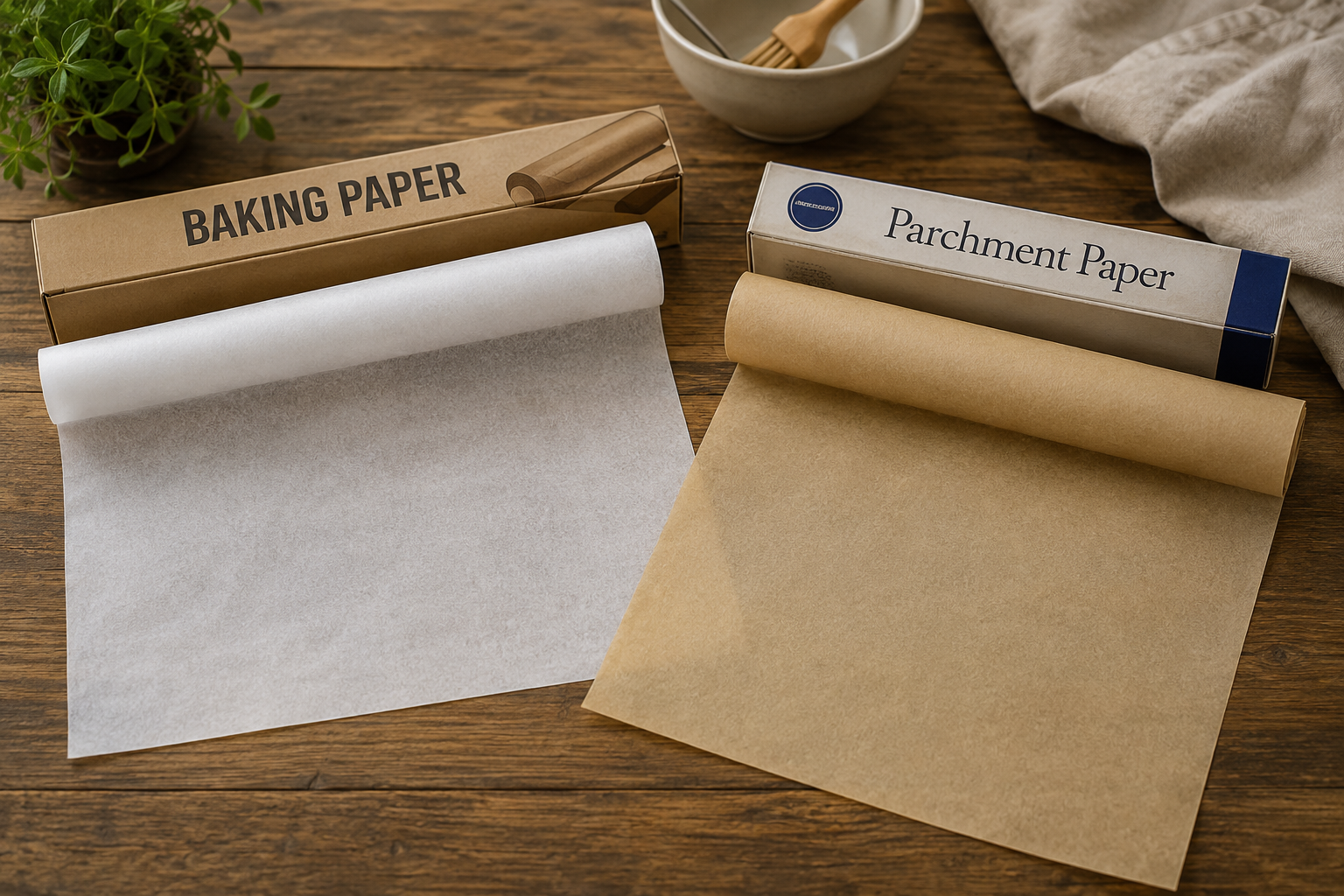
Every baker has a story about a ruined batch. The cookies that fused to the tray and broke apart when lifted. The cake layer that stubbornly clung to the pan. The pastry base that burned underneath while remaining undercooked on top. In many cases, the problem is not the recipe, the oven, or the baker’s skill — it is the paper being used.
Wax paper and parchment paper may look nearly identical on a supermarket shelf, but they are designed for completely different purposes. Confusing them can lead to disappointing results, wasted ingredients, or even dangerous kitchen accidents. Understanding the distinction is one of the most important fundamentals of baking.
This guide explains exactly what each product does, when to use it, and how choosing the right paper can instantly improve your baking results.
What Is Wax Paper?
Wax paper is paper coated on both sides with a thin layer of wax, traditionally paraffin wax or modern food-safe vegetable waxes. This coating creates a moisture-resistant, non-stick surface that works extremely well for food preparation and storage.
Because of its smooth coating, wax paper is ideal for:
- Rolling out sticky dough
- Wrapping sandwiches or baked goods
- Separating cookie or pastry layers
- Storing chocolates and confectionery
- Protecting countertops during messy preparation
The major limitation of wax paper is heat resistance. The wax coating melts under oven temperatures and can smoke or ignite when exposed to direct heat. This means wax paper should never be used inside an oven.
That single mistake is responsible for countless ruined recipes and smoke-filled kitchens.
What Is Parchment Paper?
Parchment paper, also known as baking paper, is specially treated cellulose paper designed to withstand high temperatures. Most parchment papers are coated with silicone, giving them excellent non-stick and heat-resistant properties.
Unlike wax paper, parchment paper is oven-safe and commonly tolerates temperatures around 220–230°C.
Professional bakers rely on parchment paper because it:
- Prevents sticking during baking
- Promotes even heat distribution
- Reduces burning on tray bottoms
- Eliminates the need for excessive greasing
- Makes cleanup significantly easier
From cookies and cakes to bread and pastries, parchment paper is the standard choice for oven baking.
The Biggest Mistake Home Bakers Make
The most dangerous mistake in amateur baking is using wax paper in the oven instead of parchment paper.
Since both products look similar, many home bakers assume they can be substituted. They cannot.
When wax paper is heated:
- The wax coating melts quickly
- Food may absorb a waxy residue
- Smoke can develop at higher temperatures
- The paper may ignite under direct heat
Even when it does not catch fire, the melted wax can affect both taste and texture. Professional kitchens strictly separate the use of these products for this exact reason.
The safest rule is simple:
If heat is involved, always use parchment paper.
Where Wax Paper Actually Excels
Although wax paper should never enter the oven, it remains one of the most useful tools in baking preparation and storage.
Rolling Dough
Wax paper works exceptionally well for rolling pastry or cookie dough without sticking. Placing dough between two sheets helps avoid adding excess flour, preserving texture and tenderness.
Storing Baked Goods
Wax paper is perfect for separating layers of cookies, brownies, or chocolates during storage. It prevents sticking while protecting delicate decorations and glazes.
Wrapping Confectionery
Fudge, chocolate bark, caramel, and candy can all be wrapped effectively in wax paper to maintain freshness and prevent drying.
Protecting Work Surfaces
During chocolate tempering or sugar work, wax paper creates a disposable non-stick workspace that simplifies cleanup.
Reading Recipes Correctly
Recipe terminology can sometimes create confusion, especially across international cooking websites and older cookbooks.
Some recipes loosely use “wax paper” when they actually mean parchment paper. Others refer to “greaseproof paper,” which is yet another category.
The safest interpretation is based on context:
- Oven baking = parchment paper
- Cold preparation or storage = wax paper or parchment
- Direct heat = never wax paper
For Pakistani home bakers exploring recipes from global food blogs and social media creators, understanding this distinction is especially important.
Professional Bakers Never Guess
In professional bakeries, paper usage is extremely disciplined.
- Parchment paper is used for anything entering the oven.
- Wax paper is reserved for wrapping, storage, and cold preparation tasks.
This separation prevents wasted ingredients, inconsistent results, and safety hazards.
Home bakers who adopt the same habits usually notice immediate improvements in baking quality and consistency.
Fay’s Baking Paper Range for Pakistani Kitchens
As Pakistan’s baking culture continues to grow, reliable baking essentials have become increasingly important for both home bakers and commercial kitchens.
Fay offers a baking and kitchen paper range designed for modern Pakistani households. Fay’s parchment paper delivers dependable heat resistance and non-stick performance for baking applications, while its wax paper products provide reliable moisture resistance and smooth handling for preparation and storage tasks.
For bakers who want consistent performance without uncertainty, Fay provides practical kitchen solutions trusted by households nationwide.
Final Thoughts
Wax paper and parchment paper are not interchangeable, even though they may appear similar. One is designed for cold preparation and storage, while the other is engineered specifically for oven use.
Knowing the difference protects your recipes, improves consistency, and makes baking safer and more professional.
- Use wax paper for wrapping, rolling, storing, and separating.
- Use parchment paper for baking, roasting, and anything involving heat.
With the right baking paper in your kitchen, ruined batches become far less common — and every bake becomes easier, cleaner, and more reliable.
Visit Fay Pakistan to explore baking paper products designed for serious bakers across Pakistan.
FAQs
1. Can wax paper be used in the oven?
No. Wax paper is not oven-safe. The wax coating melts under heat and may smoke or catch fire. Always use parchment paper for baking or roasting.
2. Is parchment paper reusable?
Yes. High-quality parchment paper can often be reused multiple times for low-grease baking applications like cookies or pastries, provided it is not burned or torn.
3. What temperature can parchment paper withstand?
Most parchment papers are safe up to approximately 220–230°C, though premium versions may tolerate slightly higher temperatures.
4. Can parchment paper replace wax paper?
In many cold-preparation tasks, yes. However, parchment paper is usually stiffer and less moisture-resistant than wax paper, making wax paper better for wrapping and storage.
5. Why do cookies stick even when using baking paper?
Cookies may stick if low-quality paper is used, if the paper tears during baking, or if sugary mixtures caramelize excessively. Using premium parchment paper helps reduce sticking significantly.
6. What is the difference between greaseproof paper and parchment paper?
Greaseproof paper resists oil and moisture but is not always heat-resistant like parchment paper. Parchment paper is specifically treated for safe oven use and provides superior non-stick performance.
No Responses